

Herniated Disc Treatment in Steele Creek, Charlotte, NC
What Is a Herniated Disc?
Each disc in your spine has a tough outer ring and a softer, gel-like center. A herniated disc occurs when part of that inner material pushes through a weak spot or tear in the outer ring. It is sometimes called a slipped or ruptured disc. When the displaced material presses on or irritates a nearby nerve root, it can cause pain, numbness, or weakness that travels well beyond the spine itself.
At Urgent Chiropractic of Steele Creek, we look at how your spine moves, where your symptoms travel, and which positions or activities aggravate them, so we can build a personalized plan focused on comfort, mobility, and function.
Common Symptoms of a Herniated Disc
Symptoms depend on where the herniation is and whether it is pressing on a nerve. Some herniated discs cause no symptoms at all. Common symptoms may include:
- Sharp or aching pain in the lower back or neck
- Pain that travels into the buttock, leg, or foot, often called sciatica
- Pain that runs from the neck into the shoulder or arm
- Numbness or tingling in an arm, hand, leg, or foot
- Muscle weakness in the affected arm or leg
- Pain that worsens with sitting, bending, coughing, or sneezing
- Muscle spasm and reduced range of motion
- Difficulty standing or walking for long periods
Loss of bladder or bowel control, or numbness in the groin or inner thighs, needs emergency care. Call 911 or go to the nearest emergency room.
What Causes a Herniated Disc?
Most herniated discs develop from gradual wear on the disc over time, though a single strain or injury can be the final straw. Common contributing factors may include:
- Age-related disc wear and loss of hydration
- Lifting with the back rather than the legs
- Repetitive bending, twisting, or heavy lifting
- A fall, auto accident, or sports injury
- Prolonged sitting or poor postural habits
- Excess body weight loading the spine
- Smoking, which can reduce the nutrition that reaches the discs
- Weak core and spinal support muscles
More than one factor is usually involved, which is why the evaluation matters as much as the diagnosis.
How Is a Herniated Disc Diagnosed?
Evaluation typically begins with a review of when your symptoms started, where they travel, what makes them better or worse, and any previous injuries or relevant health history. Your provider may assess posture, spinal motion, reflexes, muscle strength, and sensation, and may use specific movement tests to see whether a nerve root is involved.
Depending on your symptoms and examination findings, imaging such as an MRI may be recommended to confirm the source of your pain. If your findings point to care beyond what we provide, we will refer you to the right specialist.
Non-Surgical Herniated Disc Care
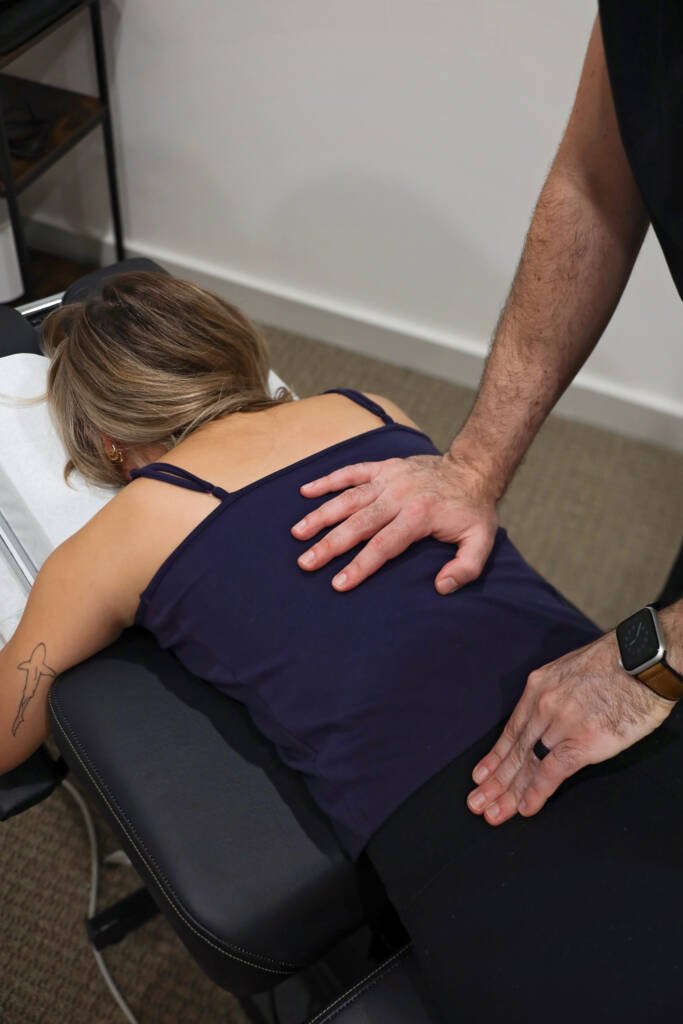
Many herniated discs improve with conservative care. Our approach focuses on easing pressure on the affected disc and the nerve around it, while rebuilding the movement and support your spine needs to stay comfortable. Care is built around your examination findings and your recovery goals.
For many patients that includes disc and spine decompression, a gentle, non-surgical therapy that creates space between the vertebrae, alongside chiropractic care when appropriate.
- Chiropractic care when appropriate
- Spinal decompression therapy
- Dry needling for muscle spasm and guarding
- Therapeutic exercise and core strengthening
- Soft tissue therapies
- Activity modification during recovery
- Non-surgical treatment based on your evaluation