

Dry Needling in Steele Creek, Charlotte, NC
Release Tight Muscles Without Medication
Dry needling uses very fine, sterile, single-use needles to release tight bands of muscle, often called trigger points, that have not let go on their own. It is drug-free, and nothing is injected, which is where the name comes from.
At Urgent Chiropractic of Steele Creek, dry needling is used as part of a broader plan rather than as a standalone fix. It pairs naturally with chiropractic care, because releasing a tight, guarded muscle often makes the underlying joint work hold better and hold longer.
What Is Dry Needling?
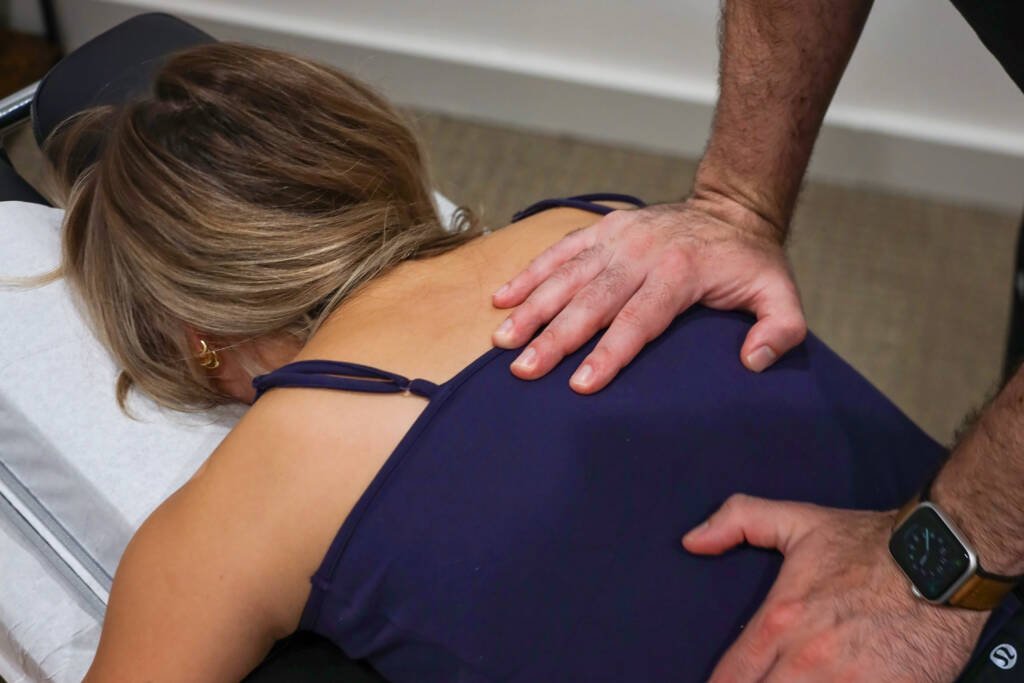
Dry needling targets a specific, tender knot inside a muscle: a taut band that stays contracted and can refer pain to other areas. A thin needle is placed directly into that spot. The aim is mechanical: interrupt the contraction, restore normal length to the tissue, and improve local circulation so the muscle can move and recover normally.
Why Trigger Points Matter
A trigger point is a small, irritable spot in a muscle that stays tight even at rest. It can limit how far a joint moves, pull on nearby structures, and send pain elsewhere; a trigger point in the upper shoulder, for example, can refer pain up into the head. Trigger points often develop after an injury, with repetitive strain or long hours at a desk, or when a muscle is guarding a painful joint. Stretching and massage do not always reach them, which is where dry needling can help.
Conditions We Commonly Address
Dry needling is most often used alongside chiropractic care for muscle-related pain. Reasons patients ask about it include:
- Persistent neck, shoulder, and upper back tightness
- Lower back pain with muscle guarding or spasm
- Tension headaches traced to the neck and shoulders
- Muscle tightness that comes with sciatica
- Hip, glute, and hamstring tightness that limits movement
- Sports and overuse strains, including sports injuries
- Muscle soreness and guarding after an auto accident
- Jaw and shoulder tension linked to stress
If your symptoms are not on this list, that does not rule dry needling out. It is one of several tools, and the evaluation decides whether it is the right one for you.
Does It Hurt? What a Session Feels Like
The needles used are far thinner than the ones used for injections and blood draws. Most people describe insertion as a light tap, and many do not feel it at all. When the needle reaches a trigger point, you may feel a brief twitch or a deep ache. That response is expected, it passes in seconds, and it is often followed by a noticeable drop in tightness.
Your provider will tell you beforehand which muscles will be treated and what you may feel, so nothing during the session comes as a surprise. Mild soreness afterward, similar to the day after a workout, is the most common side effect. Dry needling is not right for everyone, so tell us if you are pregnant, take blood thinners, or are uneasy about needles.
How Dry Needling Fits Your Care Plan
Dry needling is rarely the whole plan. It is most useful when it is combined with chiropractic adjustments, soft tissue work, and exercise that rebuilds strength in the area once the tension is gone. Releasing a muscle without addressing why it was tight tends to buy relief that does not last.
Your provider will walk through your evaluation with you, explain whether dry needling is appropriate for your situation, and adjust the plan as your symptoms change. If it is not a good fit, we will say so and recommend something that is.